Thursday, February 25, 2016

Pathos- Lucy in the Sky with Diamonds


Rachel Stern


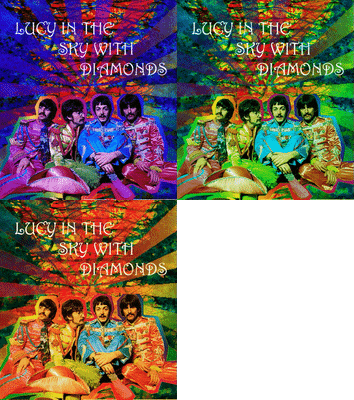
Lucy in the Sky with Diamonds has a strong appeal to pathos. The first major point is that this is a song; songs tend to have an appeal to pathos because people find themselves connected to a song, whether or not they realize the meaning. One of the definitions of pathos is that it is focuses on the emotions (or imagination) in the audience, and Lucy in the Sky with Diamonds directly plays into the imagination of the listeners. Throughout the song there are countless lyrics that raised speculation, while also allowing listeners to picture images and experiences in their minds. Lines such as, “a girl with kaleidoscope eyes” and, “Where rocking horse people eat marshmallow pies” are just a few examples that show how the word choice really impacted the way people interpreted it. Also, because this song was released during a time when The Hippie Movement and fascination with drug use was at its height, it had a huge impact on society as people felt they could personally connect to the lyrics. 

Ethos of Lucy in the Sky with Diamonds

Rebecca Tomilchik
trippy psychedelic drugs colorful tripping

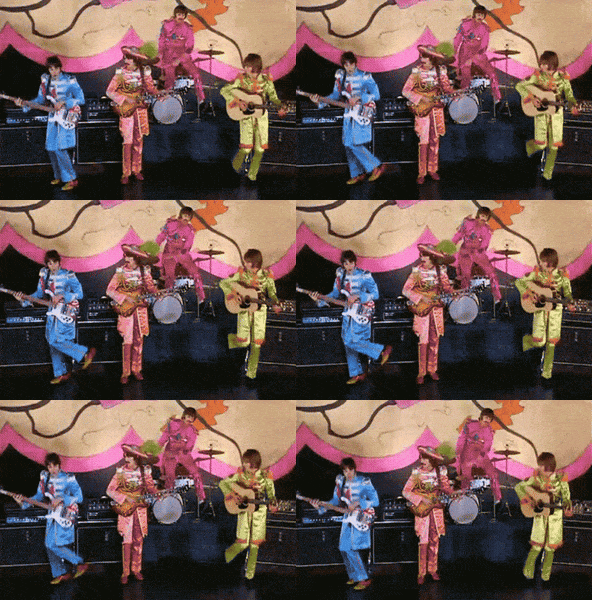
Ethos is the rhetorical term used to describe the credentials of an author.  Basically, it explains why the author is a trustworthy and credible source of information.  In the case of the song, “Lucy in the Sky with Diamonds”, the ethos of this piece comes from the past experiences and reputation of the members of The Beatles.  This band is incredibly well-known, and its music is still very popular today, which speaks to its extrinsic ethos.  Extrinsic ethos comes from the track record of the author(s).  The Beatles have released around 27 albums, almost all of which have been incredibly successful, which allows you to confidently say that they are a popular band that has captivated the minds and ears of millions.  Furthermore, The Beatles were also known to experiment with hallucinogens, such as marijuana and acid, so they are able to easily create songs that reflect those experiences.  On the other hand, the Beatles have intrinsic ethos as well, which is demonstrated through presentation.  When it comes to songs, it can be challenging to identify intrinsic ethos since songs, this one in particular, are not educational or informative documents that need to have a reliable author.  My approach is to look at the creative aspect of the song, such as the tune and lyrics.  To put it plainly, it’s a good song!  For example, the following stanza exemplifies the talent of the band members:
Picture yourself in a boat on a river
With tangerine trees and marmalade skies
Somebody calls you, you answer quite slowly
A girl with kaleidoscope eyes


These lyrics are clearly well-crafted, which contributes  to the intrinsic ethos of the song and of the writers.  Although it is challenging to define a song’s writers as “credible”, as ethos dictates, it is possible to establish the trustworthiness of The Beatles through their past experiences, drug use, and musical talent.  

Pathos in "Revolution"


John Lennon articulates his lyrics in a specific way to appeal to the listener's emotions through pathos. He reassures the audience that there will be an end to this war through the repetition of the verse, "Don't you know its gonna be alright." The Beatles were also able to effectively persuade their listeners to be apart of the antiwar protests through their music. Lennon creates a sense of animosity towards the government in the lines, "But when you want money for people with minds that hate, All I can tell is brother you have to wait." which in turn influences the listeners to take action. He argues that the audience's tax dollars should not be spent on a destructive war that they don't support. These lyrics are used to evoke a sense of togetherness among listeners, and encourage that supporters stand together to create the changes they want to see. The Beatles are able to create a strong emotional response due to the fact that this was their first song that addressed political issues. The song initially came as a shock to their listener's, but eventually the message of peace not war arose and heightened the support of the anti war movement because the audience understood how passionate The Beatles were on this issue and they wanted to support them.
-Gina Cole

Tuesday, February 23, 2016

Kairos in Lucy in the Sky with Diamonds


Rebecca Tomilchik


Kairos is an important rhetorical term that describes the appropriateness and time period of a piece of literature, photograph, etc. that one is writing about.  The 1960’s attends to the Kairos of The Beatles, as that time period was crucial in molding the music written by the famous band.  The song, “Lucy in the Sky with Diamonds,” was released on June 2, 1967 to the American public as a part of the “Sgt. Pepper’s Lonely Hearts Club Band” album.  This song fit perfectly in the revolutionary era known as the sixties due to what was going on in the United States at the time.  This decade was categorized by social revolution; changes in gay rights, women’s rights, African American rights, new technology, and pop culture.  “Lucy in the Sky with Diamonds” exemplified the changing attitude towards drugs in the sixties.  Many people believe this song was inspired by psychedelic drugs, as the initials of the song spell out “LSD,” but it was actually written after John Lennon was presented with a drawing done by his 4 year old son.  Although it is important to note that the artists were believed to be greatly impacted by LSD and other hallucinogen use.  With lyrics such as “... where rocking horse people eat marshmallow pies” and “Everyone smiles as you drift past the flowers that grow so incredibly high,” it is fairly obvious that the artists were inspired not only by their artistic tendencies, but by psychedelics as well, which was also the case with other bands of the time, such as the Grateful Dead and Pink Floyd.     

Major Rhetorical Argument; Stasis Theory


 Rachel Stern 


Lucy in the Sky with Diamonds was released by The Beatles in 1967, a time when The Hippie Movement was in full swing. Originally, The Hippie Movement evolved from influences of The Beatniks from the previous decade. The appeal to stray away from the mainstream was very convincing for many young Americans, and musicians who wanted to share their feelings on peace and love eventually caught on too. The Beatles were one of the many bands who used their music to spread messages and had a strong influence on society. When Lucy in the Sky with Diamonds was released, John Lennon claimed that his son Julian was the inspiration behind it, based on a drawing he made in nursery school. Because of the attitudes of many in society at this time, the song was interpreted as a reference about LSD, and it was even connected to Alice and Wonderland. Although they claimed this song was not written for this purpose, John Lennon had admitted to using LSD many times before, which led society to believe that this song was written with that exact purpose. Overall, I think The Hippie Movement and fascination with drug use in America during this time definitely influenced the true meaning behind this song. 

Kairos in The Beatles "Revoltuion"


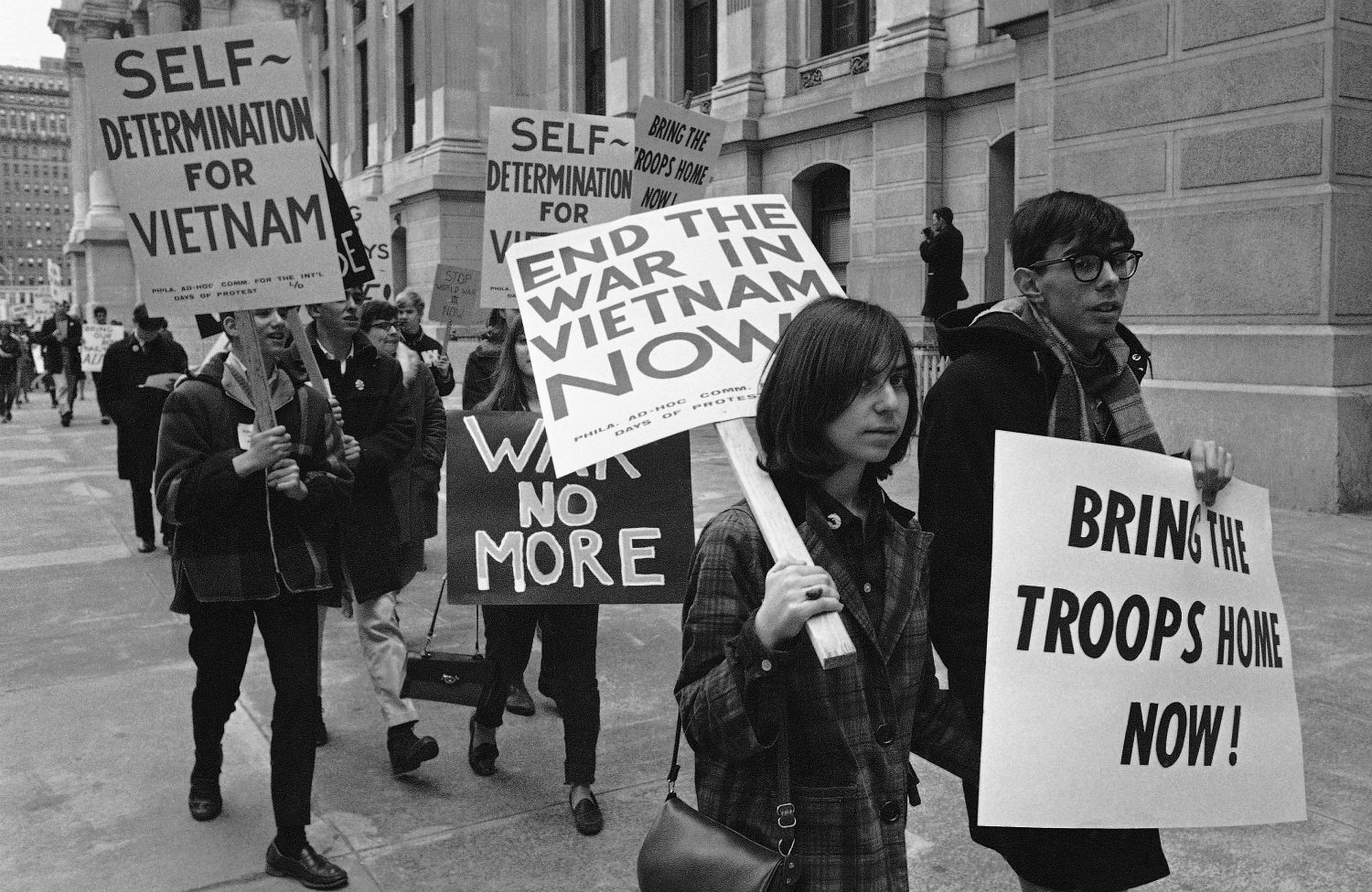
"Revolution" was The Beatles first political song written in response to the Vietnam War. The song was released in 1968 during the time of heightened political protest against the Tet Offensive. In an attempt to mitigate the United States support of South Vietnam, the North Vietnam forces launched a series of attacks on South Vietnam cities. News coverage of these brutal battles between North Vietnam, South Vietnam, and the United States was reported to the U.S shocking and destroying the citizens support of the Vietnam war. The Tet Offensive was a turning point in the Vietnam War. "Revolution" was written in the heart of the anti war protest, John Lennon creates a song that mirrors the rhetorical situation of the time period. The Beatles deliver the message that they don't support the Vietnam war nor do they think a violent war overseas is the solution, they sing, "But when you talk about destruction, Don't you know that you can count me out." They were able to effectively convey their opinions on the war to their audience of predominately youthful audience that were also advocates for peace not war.
 -Gina Cole